Age Verification Vending Machines for Licensed Retail
An age verification vending machine is a configurable dispensing system for licensed operators and distributors evaluating legally permitted controlled retail. Begin with the exact merchandise, jurisdiction and eligible venue. Age-gated access is not proof that automated sale is lawful for a product. Third-party verification, controlled collection and audit requirements must be defined in the project scope. Establish the required permissions and review the identity-data process before selecting the cabinet, payment arrangement or approval fallback. Buyers comparing age restricted vending machine and id verification vending machine options should use the same product samples and destination requirements when evaluating alternatives. This page organizes the available family around purchasing decisions; follow the individual product links for configuration details. Use the questions below to prepare a requirement brief, identify the options that need confirmation and explain who will operate, refill and maintain the equipment after delivery.
Compare the available product platforms
Use the documented product fit and configuration scope to shortlist equipment. A photograph or concept illustration does not establish an unlisted option, approval or performance guarantee.
Age-Restricted Vending Machine
Licensed adult retail · Approved hospitality venues
- Products: Only products legally permitted for automated sale
- Storage: Product-specific and jurisdiction-specific
- Delivery: Locked controlled collection workflow
Third-party ID document verification scope
Key specifications
This category currently contains one product platform. Compare its specified configuration before considering a different cabinet or a new integration.
- Products
- Only products legally permitted for automated sale
- Storage
- Product-specific and jurisdiction-specific
- Delivery
- Locked controlled collection workflow
- Payment / access
- Identity decision linked to transaction authorization
- Connectivity
- Approved verification provider and audit trail
- Selection priority
- Licensing, privacy and age-verification law
Establish product and location eligibility first
Identify the product classification, destination and proposed venue before discussing the machine's appearance. Rules for tobacco, vape, alcohol, CBD or other restricted goods cannot be inferred from a cabinet feature. The buyer must obtain legal review, licenses and approval for the product and verification method. Keep the permitted operating hours and access conditions in the project brief. A distributor should not reuse an approval from another market as evidence that an apparently similar installation is allowed.
Review the verification provider and data boundary
Third-party document verification can be scoped with optional liveness or staffed approval workflows. Choose the required process with an approved provider, then establish who handles document or identity data. Review the relevant data-residency, retention and access requirements with the responsible parties. Do not treat the machine supplier's general verification discussion as a privacy approval. Record what the cabinet receives from the provider and what information, if any, the operator is authorized to retain for the transaction.
Link authorization to controlled collection
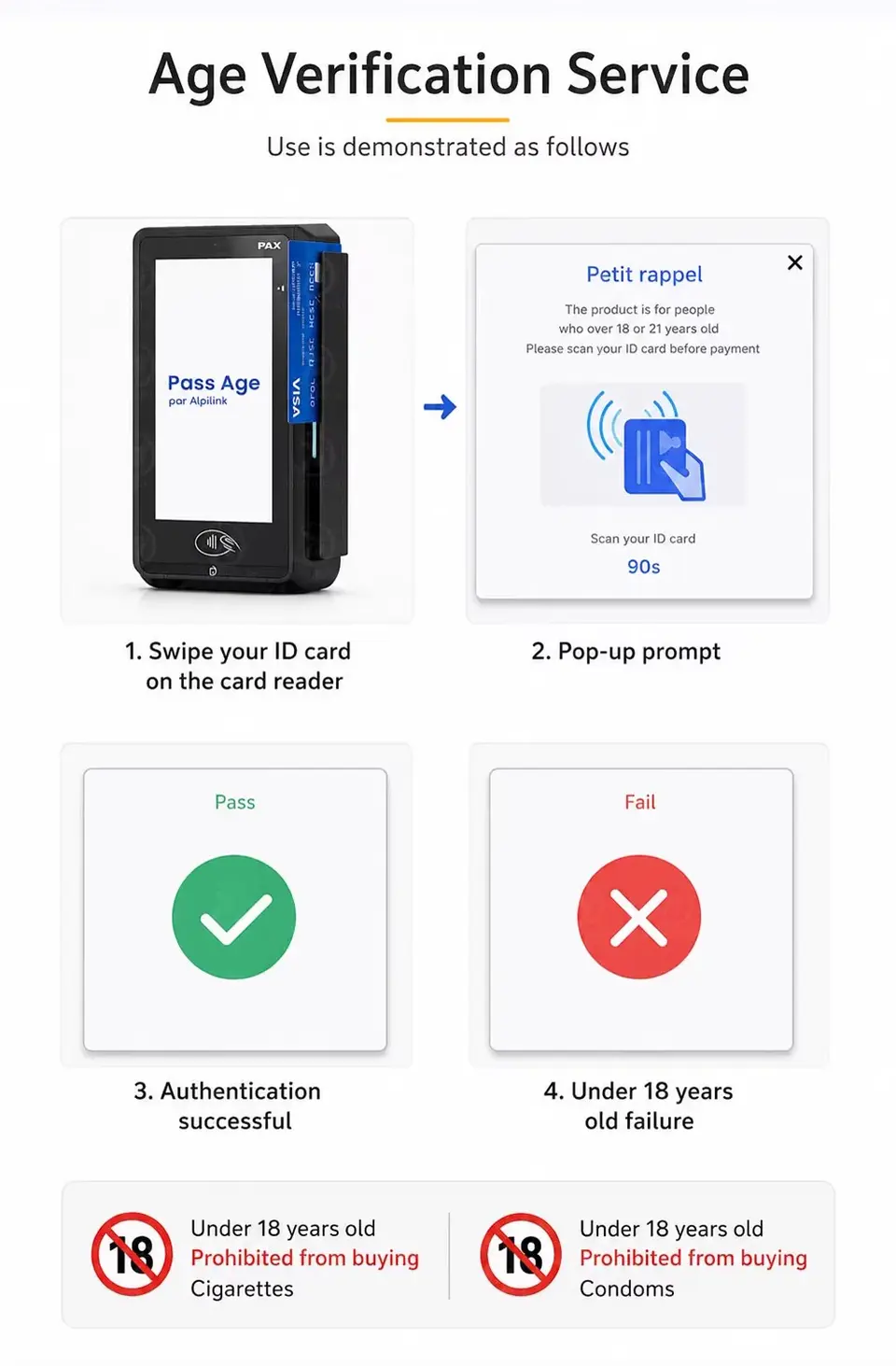
Age eligibility, payment authorization and physical access need a consistent sequence. Ask what happens when verification is rejected, a provider is unavailable or a payment fails after an approval step. A locked controlled-collection workflow restricts access until authorization is complete. Review those exception paths with the actual terminal and provider. A demonstration of successful identity checking is incomplete if it does not establish how an unauthorized or interrupted transaction prevents collection and records the operational result.
Document audit and manual review responsibilities
Transaction audit and exception records are described as scope, not as a universal regulator-approved reporting system. Define which events are needed and who may review them. If staffed approval is proposed, identify the authorized staff and fallback process before rollout. Keep the supplier's equipment responsibilities separate from the operator's licensing and day-to-day retail obligations. For each location, retain the approved product range and workflow so a later merchandise change triggers review instead of silently inheriting the first installation's settings.
Where these machines are used
Use identity-review workflows at licensed venues and vape retail eligibility at licensed venues to translate location, customer-access and service requirements into an operating brief. Compare that brief with the product configuration before selecting equipment.
Typical application settings
Consider these application settings when planning a deployment. Suitability still depends on the actual merchandise, placement and operator requirements.
- Licensed adult retail
- Approved hospitality venues
- Controlled-access locations
- Regulated specialty stores
Prepare a product-specific brief
Age-Restricted Vending Machine: configuration review
Plan legally permitted age-restricted vending with third-party identity verification, audit workflows and operator controls scoped by jurisdiction.
- Third-party ID document verification scope
- Optional liveness or staffed approval workflow
- Transaction audit and exception records
- Locked cabinet and controlled collection
Questions to resolve for this platform
- Product category and exact jurisdiction
- Permitted locations and operating hours
- Approved identity provider and data residency
- Fallback, rejection and manual review process
Availability does not mean tobacco, vape, alcohol or CBD vending is legal in a target market.
The buyer must obtain legal advice, licenses and written approval for the product, location and verification method.
Identity, biometric and document data should be handled by an approved provider under applicable privacy law; Foodline does not claim universal compliance.
View Age-Restricted Vending Machine ConfigurationCategory purchasing FAQ
Does adding ID verification make vape or alcohol vending legal?
No. Legal eligibility depends on the product, venue and jurisdiction. The buyer must obtain the required legal advice, licenses and approval for the merchandise, venue and verification method. Identity, document or biometric handling also needs an approved provider and an appropriate privacy process. This category supports procurement planning after those boundaries are established; it is not a substitute for destination-specific authorization or a guarantee that a restricted product may be sold automatically.
How should I select a Age Verification Vending Machine configuration?
For this category, begin with product category and exact jurisdiction. Compare the documented fit, storage and delivery fields below, then discuss the rest of the product-specific questions with the supplier. Bring actual samples and the intended site conditions so the discussion concerns the merchandise you will sell or issue. A category name is a starting point for selection, not a substitute for an approved configuration.
Which payment or access arrangement should the quote include?
For this configuration, the payment or access scope is: Identity decision linked to transaction authorization. Confirm the exact terminal or access provider, account ownership, network and failed-transaction procedure for the destination. Additional products in the comparison may use different arrangements. Do not assume that a payment interface supplies a merchant account, an entitlement system or every local payment method without a named integration and acceptance plan.
How do I request OEM branding and a production schedule?
Submit this category with the package samples, order quantity, destination and requested cabinet or interface changes. Separate branding from changes to the delivery mechanism, food process or software integration. Request a configuration-specific schedule that names the agreed design and approval milestones. Review the equipment configuration and approval milestones with the supplier before agreeing the order schedule.
What should an export distributor verify before ordering?
Review the selected product's installation requirements, payment or access scope and operator responsibilities alongside packing and shipping arrangements. Request model-specific documentation for the actual destination rather than assuming a cabinet image proves approval. Define the spare-parts list and support boundary, and agree which sample or acceptance evidence will accompany the quoted configuration. Stocked-product permissions and venue approvals should be reviewed separately from equipment features.