Micro Market Vending: Smart Fridges and Self-Checkout
A micro market vending installation combines shelves, chilled cabinets and checkout for operators and distributors developing unattended workplace and community retail. Plan the shelves, chilled cabinets and checkout as one serviceable layout. Unlike choosing a single dispensing cabinet, a market project also needs a customer path, a replenishment routine and an agreed loss-control approach. Use the actual site plan and product mix to compare equipment. Controlled access and checkout integrations remain project decisions; a door-lock smart-fridge system requires separate confirmation. Buyers comparing micro market kiosk and self-checkout micro market options should use the same product samples and destination requirements when evaluating alternatives. This page organizes the available family around purchasing decisions; follow the individual product links for configuration details. Use the questions below to prepare a requirement brief, identify the options that need confirmation and explain who will operate, refill and maintain the equipment after delivery.
Compare the available product platforms
Use the documented product fit and configuration scope to shortlist equipment. A photograph or concept illustration does not establish an unlisted option, approval or performance guarantee.
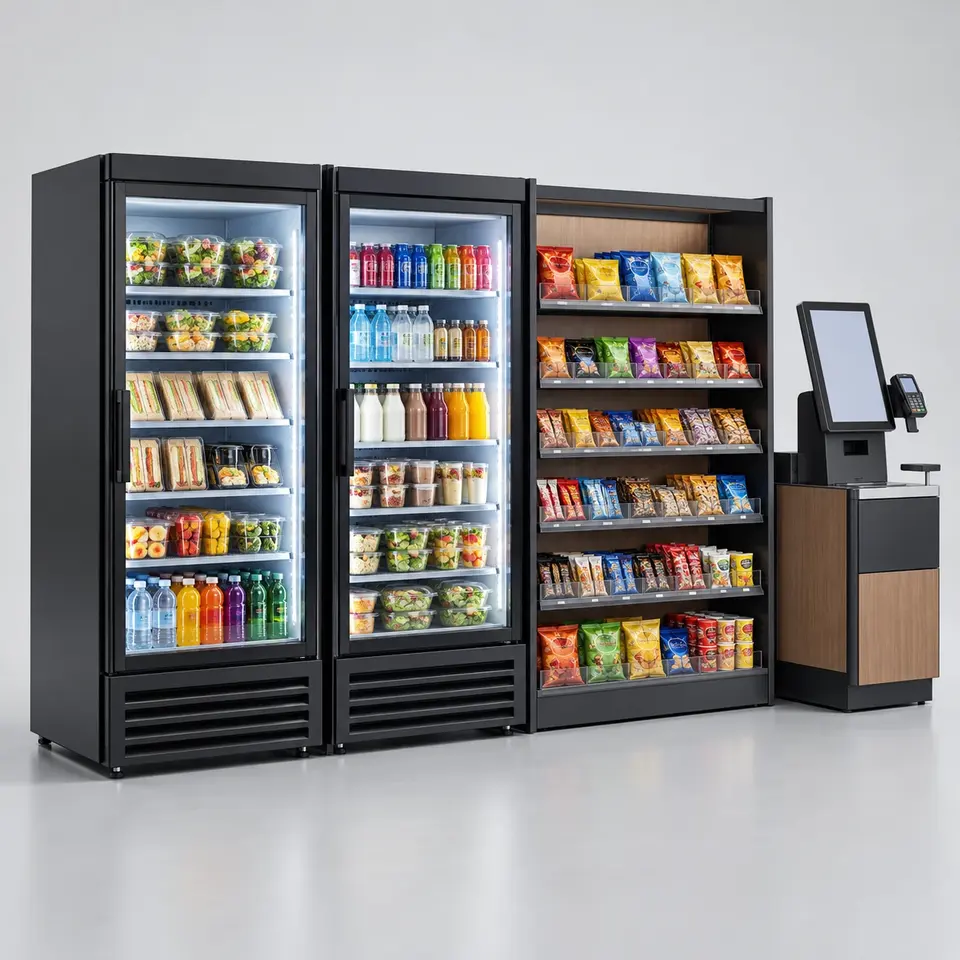
AI-generated concept illustration — final equipment may differ.
Unattended retailMicro Market Vending Machines
Office break rooms · Factories
- Products: Open-shelf snacks and compatible chilled products
- Storage: Ambient shelves and separately specified chilled cabinets
- Delivery: Customer selection with self-checkout or controlled access
Shelf, cabinet and checkout layout by site
Key specifications
This category currently contains one product platform. Compare its specified configuration before considering a different cabinet or a new integration.
- Products
- Open-shelf snacks and compatible chilled products
- Storage
- Ambient shelves and separately specified chilled cabinets
- Delivery
- Customer selection with self-checkout or controlled access
- Payment / access
- Checkout integration and merchant account by project
- Connectivity
- Checkout reconciliation and stock reporting scope
- Selection priority
- Layout, loss control, replenishment and operating responsibility
Lay out the customer route before selecting equipment
Mark the entry point, shelves, chilled products, checkout position and service access on the site plan. Shelving, cabinets and checkout can be configured together to suit the installation. Consider how a user moves from selecting an item to completing a purchase without blocking another customer. At a factory or office break room, refill staff also need a workable route. Discuss these movements before comparing cabinet count or assuming a layout copied from a different building will fit.
Separate ambient shelves from chilled storage
Prepare a merchandise list that distinguishes shelf-stable snacks from products requiring a separately specified chilled cabinet. Perishable food requires suitable storage; an ambient shelf does not provide chilled conditions. Record package dimensions, supplier storage instructions and the operator's refill interval. Decide where staff inspect expiry and remove stock. The project should explain how the shelves and cabinets work together while preserving the different handling requirements of each product group, especially when one supplier delivers ambient and chilled merchandise on different schedules.
Specify checkout and reconciliation ownership
A self-checkout project needs an agreed provider, merchant arrangement and network plan. Identify how the operator reconciles paid transactions against physical stock and how exceptions are investigated. Checkout integration and stock reporting can be configured within an agreed project scope. That does not establish compatibility with every checkout service or an existing locked-fridge recognition system. Ask for the exact interface and acceptance cases. Keep the customer purchase journey and the operator's reconciliation workflow visible in the same specification review.
Define loss-control and access responsibilities
The product highlights include loss prevention and access-control review, not a universal door-lock guarantee. Define the building's access rules and the party responsible for missing stock. Discuss replenishment, cleaning and technical support with the location owner before installation. A distributor should document which responsibilities remain with the site and which belong to the retail operator. If the customer needs controlled entry or a different cabinet-access mechanism, treat that as a separate requirement to validate rather than an assumed standard feature.
Where these machines are used
Use workplace refreshment planning and campus product and refill planning to translate location, customer-access and service requirements into an operating brief. Compare that brief with the product configuration before selecting equipment.
Typical application settings
Consider these application settings when planning a deployment. Suitability still depends on the actual merchandise, placement and operator requirements.
- Office break rooms
- Factories
- Residential buildings
- University facilities
Prepare a product-specific brief
Micro Market Vending Machines: configuration review
Plan a micro market with snack shelves, chilled cabinets and checkout, including layout, payment, stock control and operator service responsibilities.
- Shelf, cabinet and checkout layout by site
- Payment and reconciliation integration scope
- Stock visibility and replenishment planning
- Loss prevention and access-control review
Questions to resolve for this platform
- Site plan, opening hours and expected customers
- Shelf and chilled product mix
- Checkout provider, merchant account and network
- Stock loss, cleaning, refill and support responsibilities
This is a configurable project concept. Equipment, checkout software, access controls and integration availability must be established in the quotation.
View Micro Market Vending Machines ConfigurationCategory purchasing FAQ
Does this micro market include a locked smart refrigerator?
Not by default. Open shelves, chilled cabinets and self-checkout can be configured together, with loss-control and access requirements reviewed per project. A door-lock smart refrigerator would need an explicitly specified cabinet, access workflow and integration review. Share your site plan and explain whether customers browse open shelves, use a controlled cabinet or require another approved process. That distinction changes the equipment and reconciliation discussion.
How should I select a Micro Market Vending Machines configuration?
For this category, begin with site plan, opening hours and expected customers. Compare the documented fit, storage and delivery fields below, then discuss the rest of the product-specific questions with the supplier. Bring actual samples and the intended site conditions so the discussion concerns the merchandise you will sell or issue. A category name is a starting point for selection, not a substitute for an approved configuration.
Which payment or access arrangement should the quote include?
For this configuration, the payment or access scope is: Checkout integration and merchant account by project. Confirm the exact terminal or access provider, account ownership, network and failed-transaction procedure for the destination. Additional products in the comparison may use different arrangements. Do not assume that a payment interface supplies a merchant account, an entitlement system or every local payment method without a named integration and acceptance plan.
How do I request OEM branding and a production schedule?
Submit this category with the package samples, order quantity, destination and requested cabinet or interface changes. Separate branding from changes to the delivery mechanism, food process or software integration. Request a configuration-specific schedule that names the agreed design and approval milestones. Review the equipment configuration and approval milestones with the supplier before agreeing the order schedule.
What should an export distributor verify before ordering?
Review the selected product's installation requirements, payment or access scope and operator responsibilities alongside packing and shipping arrangements. Request model-specific documentation for the actual destination rather than assuming a cabinet image proves approval. Define the spare-parts list and support boundary, and agree which sample or acceptance evidence will accompany the quoted configuration. Stocked-product permissions and venue approvals should be reviewed separately from equipment features.