Whole-orange squeezing from order to collection
Plan the service around five steps: choose the drink, complete payment, feed whole fruit through the preparation mechanism, dispense into the cup and collect. FL-OJ-100 includes automatic cup handling and a cleaning system. Ask for a demonstration with the actual orange size and cup planned for your menu so the operator can see the entire sequence.
Check the cup position, the filled serving and the customer collection point during a trial. Review the quality of the finished drink with the fruit you expect to buy locally. Fruit size and juice yield influence replenishment and portion planning, so include them in the operating brief rather than comparing cabinet capacity alone.
Display a clear drink choice and collection instruction near the screen. At a gym, visitors may want a quick purchase between activities; at a mall, a shopper may pause to watch preparation. Leave space for that pause while keeping the pickup area accessible to the next customer.
FL-OJ-100 versus FL-MJ-200
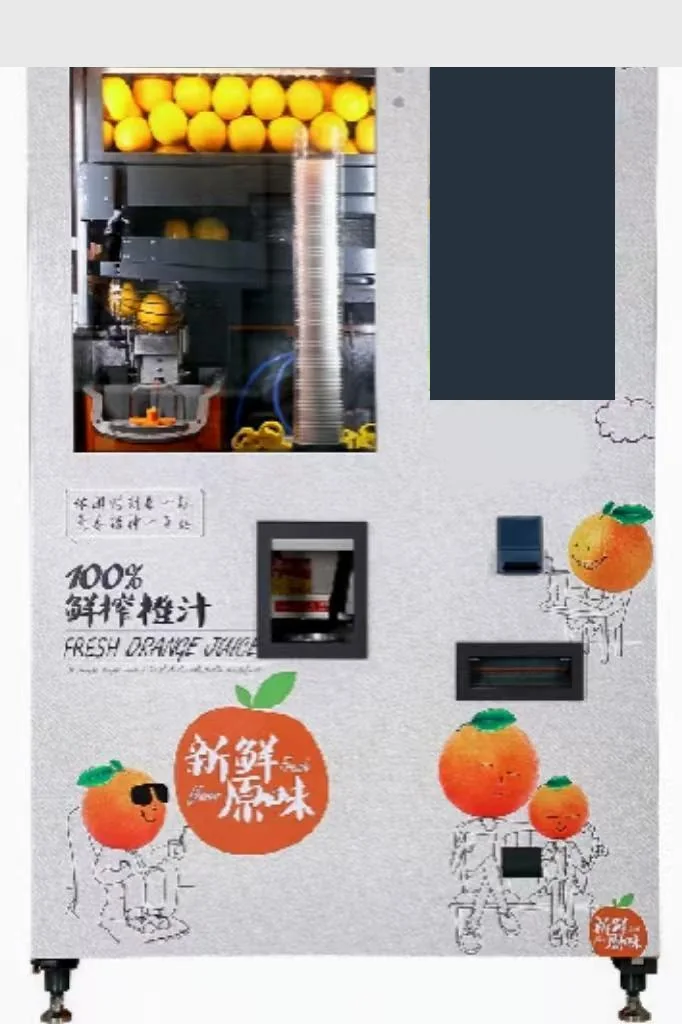
FL-OJ-100 holds approximately 75 kg of oranges and lists about 70–100 cups per full load. It has a 27-inch vertical touchscreen, a rated power of 300 W and maximum power of 800 W. Its cabinet measures 1180 × 910 × 1910 mm in width, depth and height.
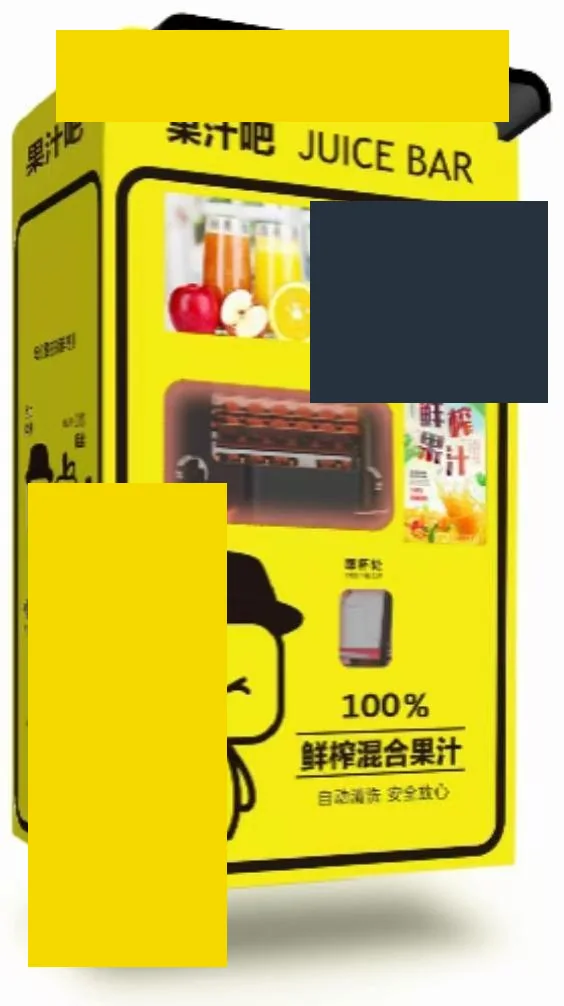
FL-MJ-200 holds approximately 45 kg of fruit and lists separate full-load outputs: 40–60 orange cups, 20–30 apple cups or about 65 mixed-juice cups. These are alternative menu configurations rather than quantities to add together. Its cabinet measures 1030 × 910 × 1930 mm, with rated power of 350 W and maximum power of 800 W.
The mixed model has a 15.6-inch touchscreen with an optional 21.5-inch advertising screen. Choose this configuration when the planned menu calls for orange, apple or pear combinations. The pure-orange model serves a more focused menu. Keep each model's fruit plan, screen, electrical specification and capacity on its own purchase checklist.
Fruit storage and replenishment
Both configurations have refrigerated storage adjustable to a minimum of 4°C. Set the operating temperature and replenishment practice with the selected fruit, local requirements and machine procedure in mind. Staff should check fruit condition before loading and remove damaged stock during each visit.
For FL-OJ-100, record the orange variety, typical size, incoming quantity and remaining stock. For FL-MJ-200, add the intended fruit combination and the supply needed for each menu choice. Cup size and preparation settings belong on the same checklist because they affect the number of servings obtained from a load.
Use a trial load to plan service frequency and supply storage at the site. A campus with concentrated lunch demand may need a different visit schedule from an office with purchases spread through the day. Review actual usage after opening and adjust the refill routine while keeping the approved preparation settings consistent.
Peel handling and juice-path cleaning
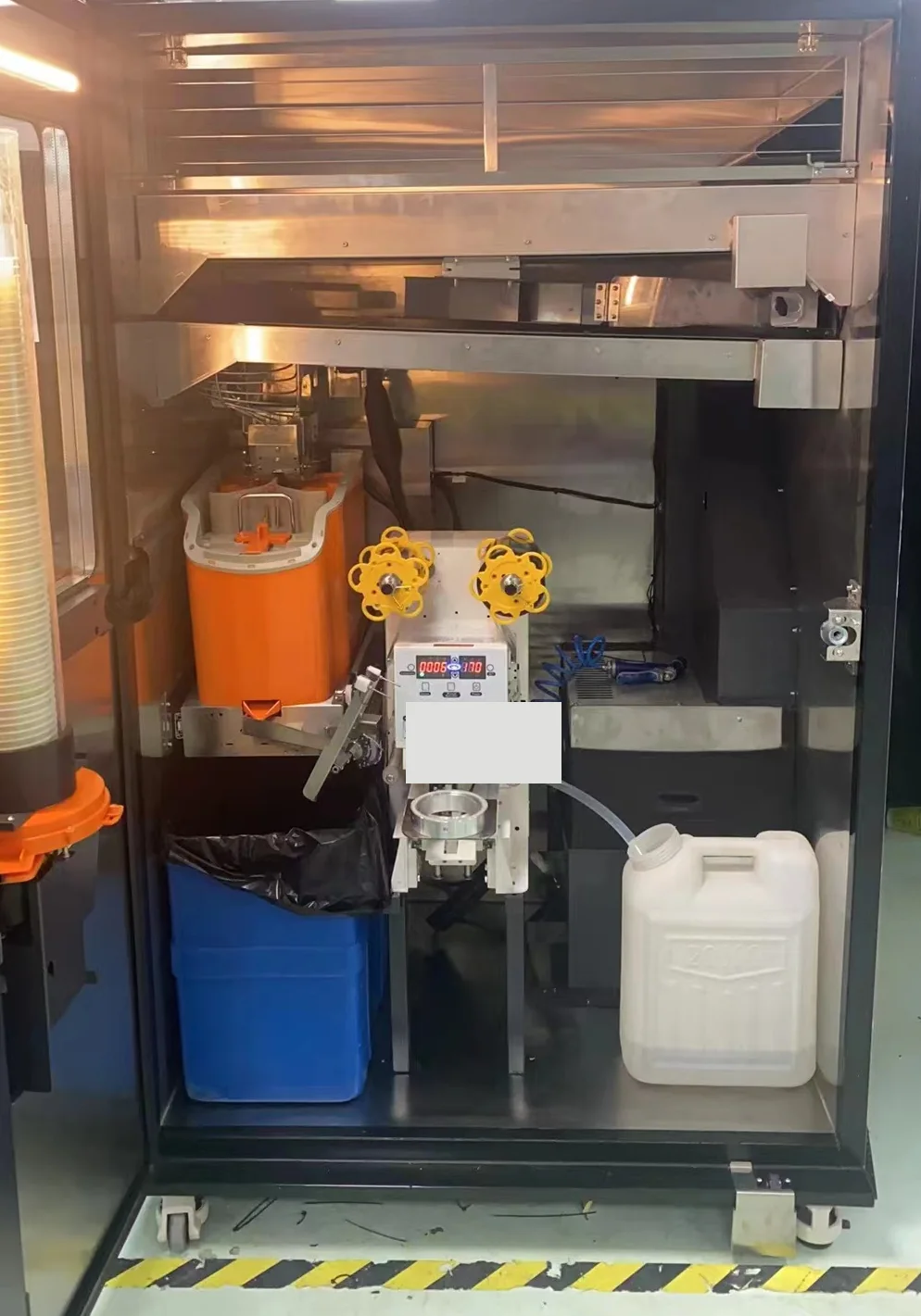
Include peel and pulp removal in the service plan. During the demonstration, locate the collection area for preparation waste and ask staff to show how it is accessed, emptied and returned to service. Plan a route to the venue's disposal point and keep suitable cleaning supplies available for the service team.
The cleaning system supports the operating routine, while staff still inspect the juice-contact parts, cup area and collection point. Follow the selected model's instructions for shutdown, cleaning materials, rinse steps and restart. A useful handover exercise is to prepare servings, remove waste, complete cleaning and then make a test drink.
Write a short checklist with the areas to inspect and the person responsible for each visit. Review the available water and drainage arrangements before choosing the final position. This links the preparation process to the practical service access a gym, mall or office can provide.
Gyms, malls, campuses and office locations
For a gym, check the route between exercise areas, changing facilities and the proposed juice station. For a mall, consider shoppers standing at the display and staff moving supplies through the service area. For a campus or office, match the menu and refill visits to breaks, lunch periods and building access.
Prepare a site plan with cabinet position, service-door clearance, available electricity, water and drainage arrangements, and space for spare cups and fruit supplies. Attach photos of the proposed route into the building. Confirm the selected cabinet and electrical configuration before final installation planning.
Review the healthy food vending machine category when comparing a juice station with chilled meal or sports-nutrition formats. Keep the decision tied to the product you want to dispense and the staff routine you can support. A focused orange menu and a mixed-fruit menu require different replenishment lists.
Payment and a practical buying checklist
Banknotes, coins and credit card configurations. Card readers (MDB) and QR payment can be configured for your market — tell us your country. Review MDB & cashless payment integration with the destination, payment provider and preferred terminal. Check successful payment, preparation, cup handling and collection together during acceptance.
Common buying mistakes include treating full-load cup counts as fixed daily output, combining the two models' capacity figures, and planning fruit replenishment while overlooking cup and waste handling. Use a written comparison that keeps the selected model, fruit mix, cup size and service tasks together.
- Name the model and proposed drink menu.
- Provide fruit size, cup volume and expected service periods.
- Confirm storage, cleaning and peel-disposal arrangements.
- Identify the operator responsible for replenishment and customer support.
Send that checklist through the juice-machine inquiry form to review the configuration for your site.
Frequently asked questions
Does an orange juice vending machine squeeze whole oranges?
FL-OJ-100 squeezes whole oranges inside the cabinet after an order. It includes automatic cup handling and a cleaning system; test the full cycle with your planned fruit and cup.
How many oranges does a juice vending machine hold?
FL-OJ-100 holds approximately 75 kg, listed as about 500 oranges, and yields about 70–100 cups per full load. Individual counts depend on fruit size; review cup volume and juice yield when planning replenishment.
Can the same vending machine make apple juice?
FL-MJ-200 is the separate mixed-juice configuration for orange, apple or pear combinations. FL-OJ-100 is the dedicated orange model. Choose the menu before selecting the cabinet.
Does a fresh juice vending machine refrigerate the fruit?
Both listed configurations have refrigerated storage adjustable to a minimum of 4°C. Establish the operating setting, fruit checks and refill routine for your selected menu and location.
How do you clean a fresh orange juice vending machine?
Follow the selected model’s procedure for the juice path, cup area and collection point. Include peel and pulp removal, the cleaning-system demonstration and a test serving after restart in staff training.